
Covington and Mandeville Fleet Graphics: Add New Vehicles to a Clear Standard
Plan fleet graphics for a Covington or Mandeville business through Pelican Wraps in Harvey. Use the current identity as a starting point, then review the actual body, equipment, condition and changing information before treating a new vehicle as a repeat.
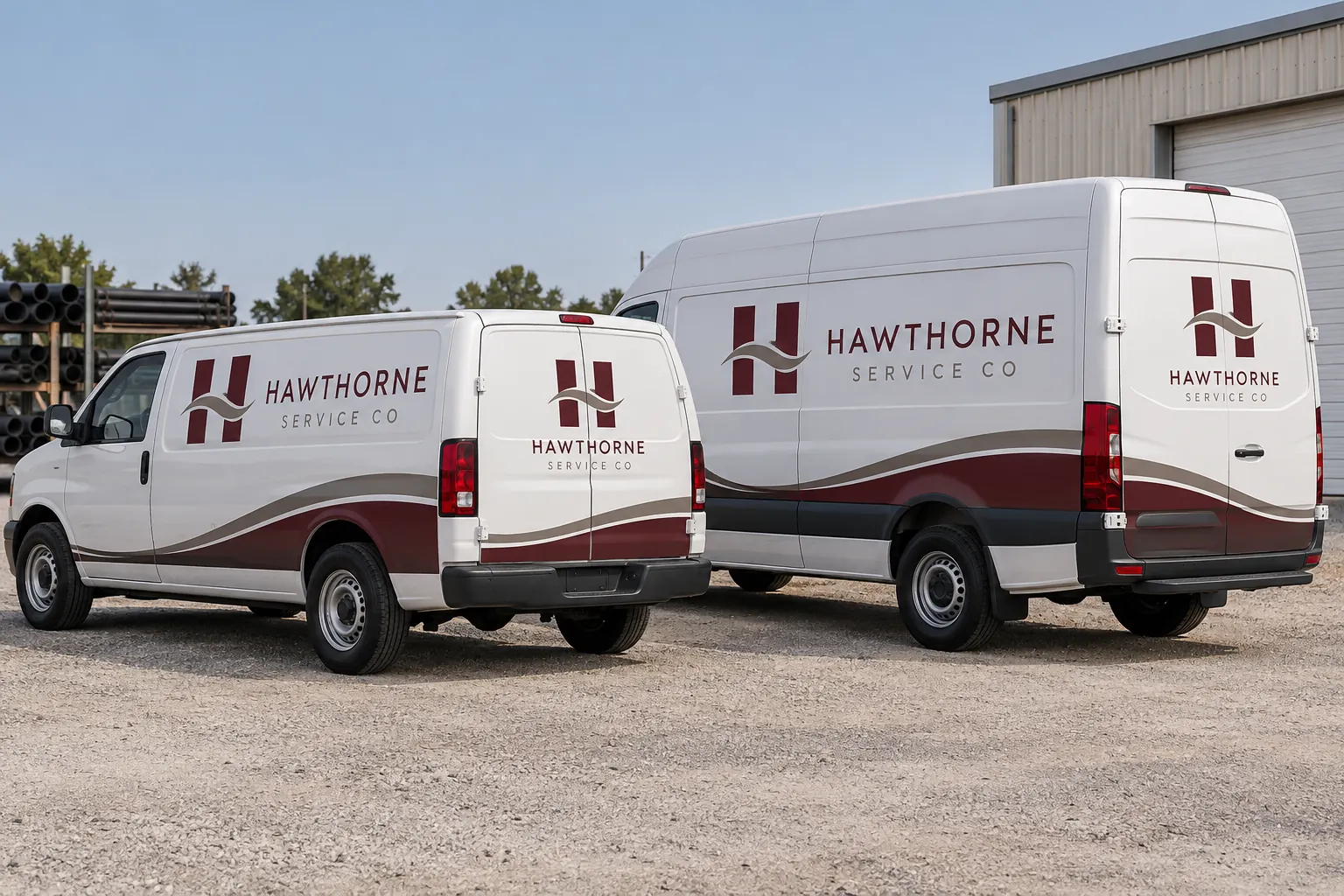
Fictional commercial design concept; not a local customer installation or a photograph of Pelican Wraps premises.
Begin with the current identity and the actual new asset
Explain whether you are adding a vehicle, replacing an older unit or updating several configurations. Supply the current master artwork and accepted reference files where available. Identify what remains fixed in the identity and what is changing in the equipment or approved business information.
Explore fleet programs and vehicle services for the actual offer. Pelican Wraps uses 1201 MacArthur Ave, Suite B, Harvey, LA 70058. This Covington and Mandeville planning route does not establish an additional office in either city or a universal local installation arrangement. Confirm the real scope and work location before moving the asset.
| Record | Include in the brief |
|---|---|
| New configuration | Actual body, equipment and photographs compared with retained sheets |
| Identity control | Current master assets and approved changing data |
| Fitted exception | Reason, affected units and accepted new layout version |
| Continuing record | Installed photographs, product references and retained older valid sheets |
Compare the new body with the retained configuration sheets
Record body length, roof, doors, equipment and intended faces and photograph the actual unit. Compare those details with the retained layout rather than assume a similar model name is sufficient. A newer high-roof van and an older standard-roof van may share identity assets while needing different fitted compositions.
Use new-model planning and survey guidance to organize the evidence. The fictional Hawthorne Service Co concept illustrates a visual family, not a customer fleet or a measured template. Label estimated dimensions and assign final verification before the file is treated as a production repeat.
Adapt spacing and coverage while preserving recognition
Retain approved logo proportions and choose the main message and contact action for the actual faces. Adapt spacing, scale and supporting graphics to usable areas rather than stretch the master artwork across a different body. Keep rear and side decisions separate where doors and equipment interrupt the layout.
Use design standards to record the fitted exception and affected units. Matching identity does not require identical stripe positions or coverage boundaries. The useful standard shows what remains consistent and why a particular new configuration differs, making the next addition easier to review without turning an exception into an unofficial replacement master.
Check changing data independently from the vehicle appearance
Confirm current destinations, branch wording, internal asset references and any applicable operator-supplied information. Name the person accepting each field and keep approval with the actual layout version. A new vehicle taking over an earlier role may still need different data and fit, even if an internal reference is reused.
Use the marking-data guide for the information distinction. Keep required markings and protected equipment identified through the responsible operator review. The designer can fit authorized text, but should not infer registration, qualifications or current destinations from an old proof or invent identifiers to make the new file appear complete.
Review new-asset condition instead of assuming automatic readiness
Provide current photographs and known paint, repair, treatment or existing-film history. New to the fleet does not independently establish a suitable starting surface or identical preparation requirements. Mark uncertainty and identify any relevant separate vehicle work or inspection question.
Use readiness planning and ask the response to identify the actual proposed system and included tasks. Compare coverage and relevant one-time fitting or design work alongside production and installation. The retained brand record is useful, but it cannot by itself establish product suitability, final dimensions, price or the actual unit readiness.
Confirm the fitted file and receiving arrangement before release
Link the new unit to its accepted configuration sheet, approved data and condition review. Identify transport, access and release contacts and provide proposed availability. Ask the supplier to confirm actual work arrangements and capacity. A familiar identity does not reserve a window or establish that a substitute unit can arrive against the same file.
Use the Northshore planning route for regional coordination and current Louisiana 511 information for journey questions. No fixed travel or installation duration is promised. Keep the actual unit reference and accepted version visible so operator and supplier understand precisely what is being released.
Update the standard after the addition is accepted
Retain the new fitted sheet, approved variable data, relevant product information and installed photographs with the unit. Record the configuration exception and care guidance. Keep the earlier valid sheets rather than overwrite them with the newest body and assume every older vehicle should now use that file.
To begin, send the Covington or Mandeville addition brief with current artwork, actual photographs, unit details, intended coverage and timing. Mark missing original records and open fit questions. The next review can define the real work without inventing a local office, completed customer program, guaranteed repeat price or measured consistency result.
Frequently Asked Questions
Prepare Your Actual Vehicle Graphics Brief
Send current photographs, vehicle quantities, logo files, coverage preferences and timing. Identify old graphics and paint concerns so the project review can address the actual equipment.
Explore planning resources or request your commercial wrap quote.
