
Commercial Vehicle Wrap Warranty Guide: Ask for the Actual Terms
Keep product coverage, finished-graphics programs and the supplier project terms clearly identified. A warranty discussion should name the installed system and applicable documents rather than turn a broad material claim into a promise about every part of the job.
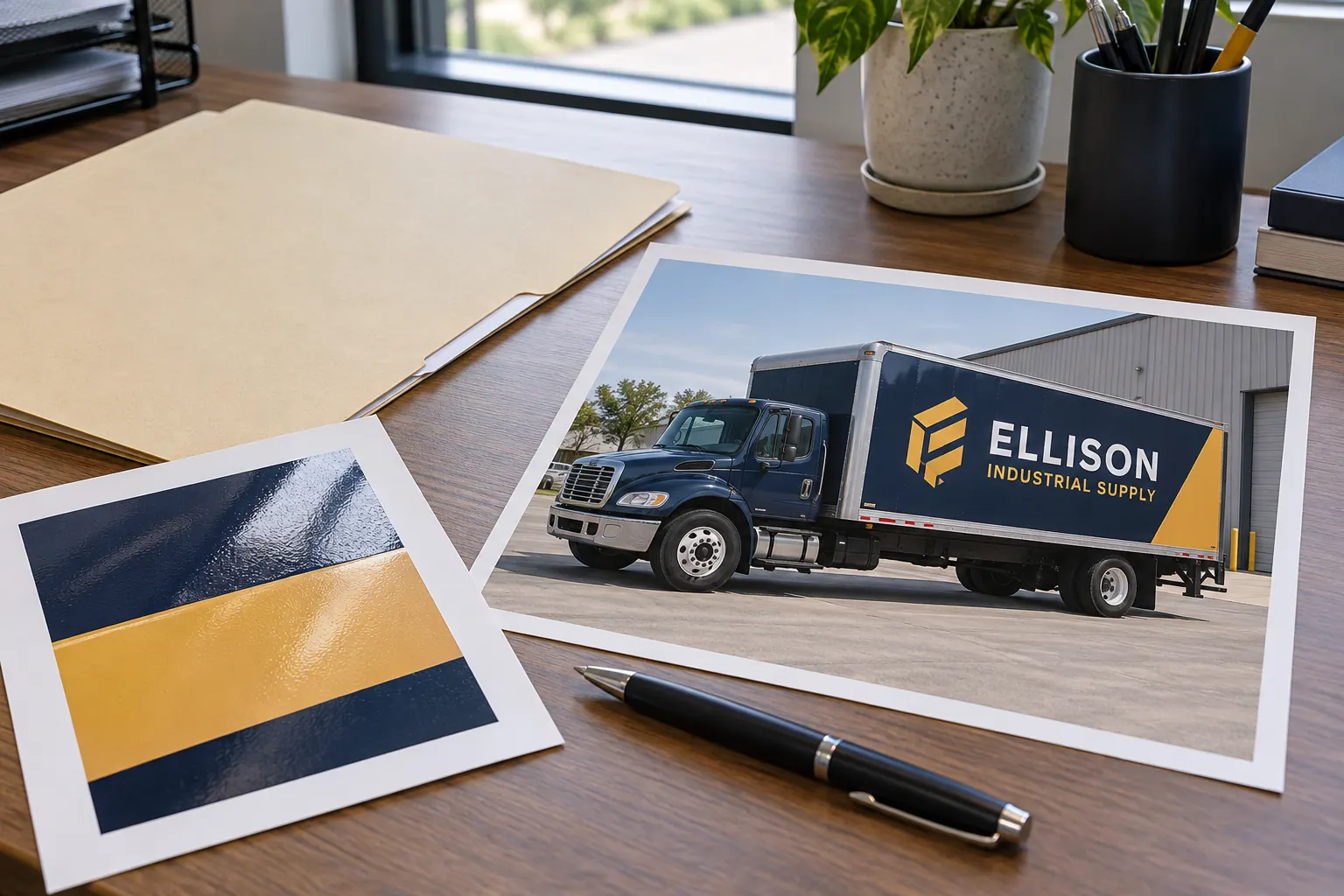
Illustrative planning concept; not a customer photograph, actual warranty record or documented company transaction.
Identify which document and provider answer each question
Ask whether a statement concerns the material product, a qualified finished-graphics program or the supplier accepted project terms. Keep the provider, document version and actual scope visible. The word warranty can otherwise hide several different promises or assumptions that do not describe the same work.
This guide does not create new Pelican terms or extend a manufacturer program to an unverified job. Request the applicable documents and confirmations for the actual proposal. The useful starting point is an identified system and accepted record, not a general marketing statement interpreted as coverage for every substrate, installation condition or later event.
Retain the named installed construction
Record the film, relevant printing and protective-system references, finish and installed areas. Keep the artwork and unit configuration linked to those details. A generic description such as premium vinyl is not enough to identify which actual product documents should be reviewed when a concern arises.
Manufacturer programs can distinguish different coverage types. 3M warranty resources provides product and finished-graphics program information, while Avery Dennison warranty information describes its product and component-system programs. Those resources are starting references; they do not establish that every proposed Pelican job receives every named program or the same terms.
Review application, exposure and exclusions for the job
Identify the covered surfaces, intended use and operating conditions and ask which actual terms apply. A roof, a vertical side, a reflective identifier and another specialty item may involve different products or conditions. Avoid transferring one product duration or exposure definition to every graphic in the fleet.
Use service-life planning to keep business expectations distinct from the applicable warranty document. Ask the responsible provider to clarify unclear terms before acceptance rather than invent an interpretation. A target service period or a sample appearance is not by itself a complete promise about defects, remedies, removal, labor or consequential business effects.
Document the starting surface and agreed responsibilities
Keep the pre-installation condition record, current photographs, known repainting and old-graphic history. Identify any concerns or exclusions addressed in the accepted project process. A later review is easier when the team can distinguish the original condition from subsequent damage or changes without relying on memory.
Use the preparation guide and paint-readiness planning for those records. This documentation does not automatically decide a claim or expand coverage. It gives the responsible provider the actual information needed to assess the concern against the installed system and relevant terms.
Ask which terms answer the question
| Question | Record to request |
|---|---|
| Which product is installed? | Named film and relevant construction |
| Which coverage applies? | Actual provider document and job confirmation |
| What happened? | Unit history and current issue photographs |
| What is the next step? | Responsible provider response and accepted action |
Keep care and operating changes in the unit history
Retain the instructions supplied for the installed system and identify the people responsible for cleaning, inspection and reporting. Record significant changes in cleaning process, equipment, bodywork or operating exposure relevant to the graphics. A single old care sheet is less useful when no one knows which material or vehicle it describes.
Use the resource hub to locate the care guide and handover checklist. Do not substitute an unreviewed cleaning or repair method for the applicable instructions. If a concern appears, document it through the actual reporting process rather than assume that a generic online fix preserves every provider requirement or resolves the cause.
Build an issue report that can be assessed
Provide the unit reference, project or installation record, material information if available and current photographs of the whole affected face and close details. Explain when the concern was noticed and any known damage, repair or cleaning change. Keep observations separate from an unsupported diagnosis of the cause.
Contact the responsible project provider through the available route and ask how the issue should be reviewed under the actual terms. Do not assume that every changed appearance is a covered product defect or that reporting automatically accepts a remedy. For a practical replacement enquiry, the repair guide helps define the scope while the coverage assessment remains a separate question.
Retain the decision and update the asset record
Keep the provider response, accepted next step and any replacement work with the original job history. Record the product and artwork used in a later repair and identify which older graphics remain. Future enquiries should be able to trace both the original installation and subsequent decisions.
For a new job, request a defined commercial graphics proposal and ask for the applicable system and terms before approval. For an existing concern, provide the issue record rather than an unexplained close photograph. A useful warranty conversation ends with the actual documents and responsible review path, not an invented universal period or a claim that every program applies automatically.
Frequently Asked Questions
Turn Your Vehicle Details Into a Clear Project Brief
Send current photographs, vehicle quantities, logo files, coverage preferences and timing. Identify old graphics and paint concerns so the project review can address the actual equipment.
Explore planning resources or request your commercial wrap quote.
