
Commercial Signs and Graphics for Connected Business Branding
Help customers recognize the business from the street, find the correct entrance and understand where to go next. Coordinate building signs, windows, walls, floors and event graphics around the same approved identity used on the commercial fleet.
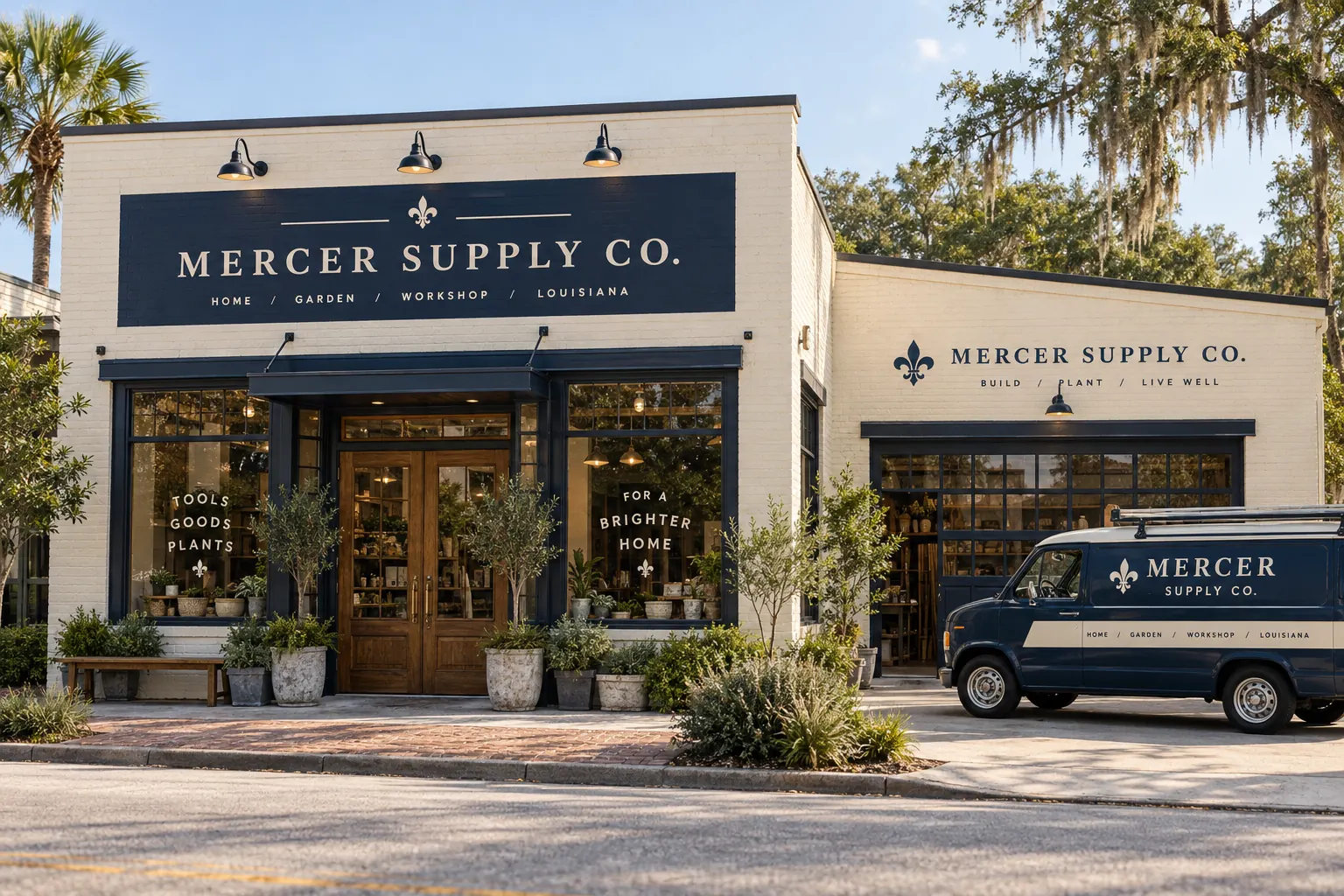
Fictional commercial graphics design concept; not a completed customer installation.
Start with the customer journey through the property
List the places where a visitor needs information: the approach from the street, the parking area, the entrance and the destination inside. Give each surface a specific job. A building sign identifies the company; a door graphic confirms the entrance; an interior panel can direct a collection or reception visit. Repeating every message at every point makes the property harder to understand.
Walk the route as a first-time visitor before choosing sizes or quantities. Photograph obstructions, doors, existing signs and changes in direction. Record which decisions happen from a vehicle and which happen on foot. This produces a useful project brief even before artwork exists and helps avoid ordering an attractive graphic for the wrong location.
Choose the right graphics application for each surface
Use commercial signs for primary identity and a clearly defined location message. Use window graphics where the design must balance visibility, light and privacy. Wall murals give interior brand stories more room than a door or vehicle panel can provide.
For pedestrian routes and campaign prompts, review floor graphics against the actual floor and maintenance routine. Banners and event graphics serve temporary spaces with different mounting and transport requirements. Keep these applications within one visual family while letting their size, viewing distance and intended duration guide the layout. A design file alone cannot confirm surface suitability.
Connect the storefront to the fleet without copying the layout
A business may meet the same customer through a van, a storefront and a trade event. Carry the approved name, logo proportions, colors and contact language between these touchpoints. The recognizable identity should remain consistent even when the composition changes substantially. A narrow door and a broad truck side need different arrangements.
Begin with the current master artwork and designate one person to approve brand changes. If a fleet rebrand is underway, record whether property graphics change at the same time or in a later phase. See commercial fleet solutions for the vehicle side of that plan. This prevents a new sign from repeating an address, URL or logo that the fleet project is about to replace.
Survey the site before selecting the production scope
Collect an overall photograph of each proposed location and a closer photograph of the surface. Include dimensions where they can be obtained safely, the material or finish if known, existing graphics and any visible damage. Identify whether the location is occupied during the proposed installation window and who controls access.
For rented properties, establish the landlord or property-manager review process before production. Ask the appropriate local authority about any approvals applicable to the specific sign and location. Do not assume that permission for an existing sign automatically covers a replacement with different dimensions or construction. Record those responsibilities in the brief so design approval, property consent and installation scheduling remain separate decisions.
Build a useful scope and compare quotes consistently
Describe the required message, location, approximate size, quantity and intended use for each item. Separate artwork development, manufacture, removal of existing graphics, surface preparation, installation and access equipment where those tasks apply. A short item schedule is easier to compare than an undefined request to brand the whole building.
Mark uncertain measurements and undecided locations rather than presenting them as final. Identify items that are essential for opening or an event and those that can follow later. If the budget changes, the project can then reduce or phase the scope without losing the main customer wayfinding function. Price comparisons only become meaningful when the competing scopes describe the same surfaces, deliverables and responsibilities.
Approve the message and the placement as two checks
Review spelling, business name, opening information and contact details in a readable artwork proof. Then review the proposed scale and placement on the site photographs. A correct logo can still be placed behind landscaping or beside the wrong entrance; a realistic placement image can still contain an outdated telephone number.
Name the final approver and keep a dated record of the accepted artwork version. Check whether graphics cross joints, door edges, controls or information that must remain visible. For multi-location work, maintain a location schedule rather than relying on a single generic proof. Each property may require a different size or arrangement even though the brand system is shared.
Plan installation, inspection and future replacements
Agree how the work area will be accessed, when business activity must pause and who can answer location questions. Provide the final approved item schedule to the person meeting the installer. If the installation reveals a surface concern, stop and resolve the changed condition instead of treating the original photograph as a guarantee.
After installation, retain location photographs, artwork versions, dimensions and the specified material information supplied for the job. Inspect graphics as part of ordinary property maintenance and report lifting, damage or changed building conditions promptly. For the initial review, send a commercial graphics brief with the site photographs, item list and target date. A defined scope makes the next conversation more productive.
Frequently Asked Questions
Turn Your Site Details Into a Clear Project Brief
Send current site photographs, an item schedule, logo files, dimensions and timing. Identify existing graphics and surface concerns so the project review can address the actual location.
Explore planning resources or request your business graphics quote.
Explore Related Project Guides
- Commercial Entrance Wayfinding Graphics
- Commercial Wall Mural Artwork Crop Planning
- Facility Visitor Route Graphics Planning
- Interior Wall Graphics Surface Survey
- Multi-Building Graphics Naming Standards
- Office Room Identification Graphics
- Property Parking Zone Graphics
- Receiving Door Identification Graphics
- Temporary Facility Relocation Graphics
- Warehouse Aisle Identification Graphics
