
Louisiana Fleet Graphics: Choose the Local Route and Keep One Clear Standard
Use this Louisiana fleet graphics hub to choose the relevant project route and organize vehicles across actual operating locations. Pelican Wraps is based in Harvey. Connect the shared identity, fitted asset records and release responsibilities before treating a statewide total as one uniform job.
Choose the route that matches the actual operating location
Start with New Orleans, Harvey and West Bank, Northshore, Baton Rouge, Lafayette or Houma and Thibodaux when that route helps explain your project. State the actual asset address even if the business uses a broader regional name. Use the location directory for other listed planning routes.
Pelican Wraps uses 1201 MacArthur Ave, Suite B, Harvey, LA 70058. These routes do not establish additional offices. A Louisiana program can involve different operating contacts and handoff arrangements while retaining one approved identity. Confirm the actual work location and supplier availability for the defined scope rather than treating a statewide heading as automatic installation capacity at every facility.
| Record | Include in the brief |
|---|---|
| Local route | Actual Louisiana operating location and relevant project route |
| Program inventory | Genuine fitted groups, quantities, exceptions and release contacts |
| Identity control | Master assets, fitted versions and approved changing fields |
| Accepted release | Actual readiness, transport and confirmed work arrangement |
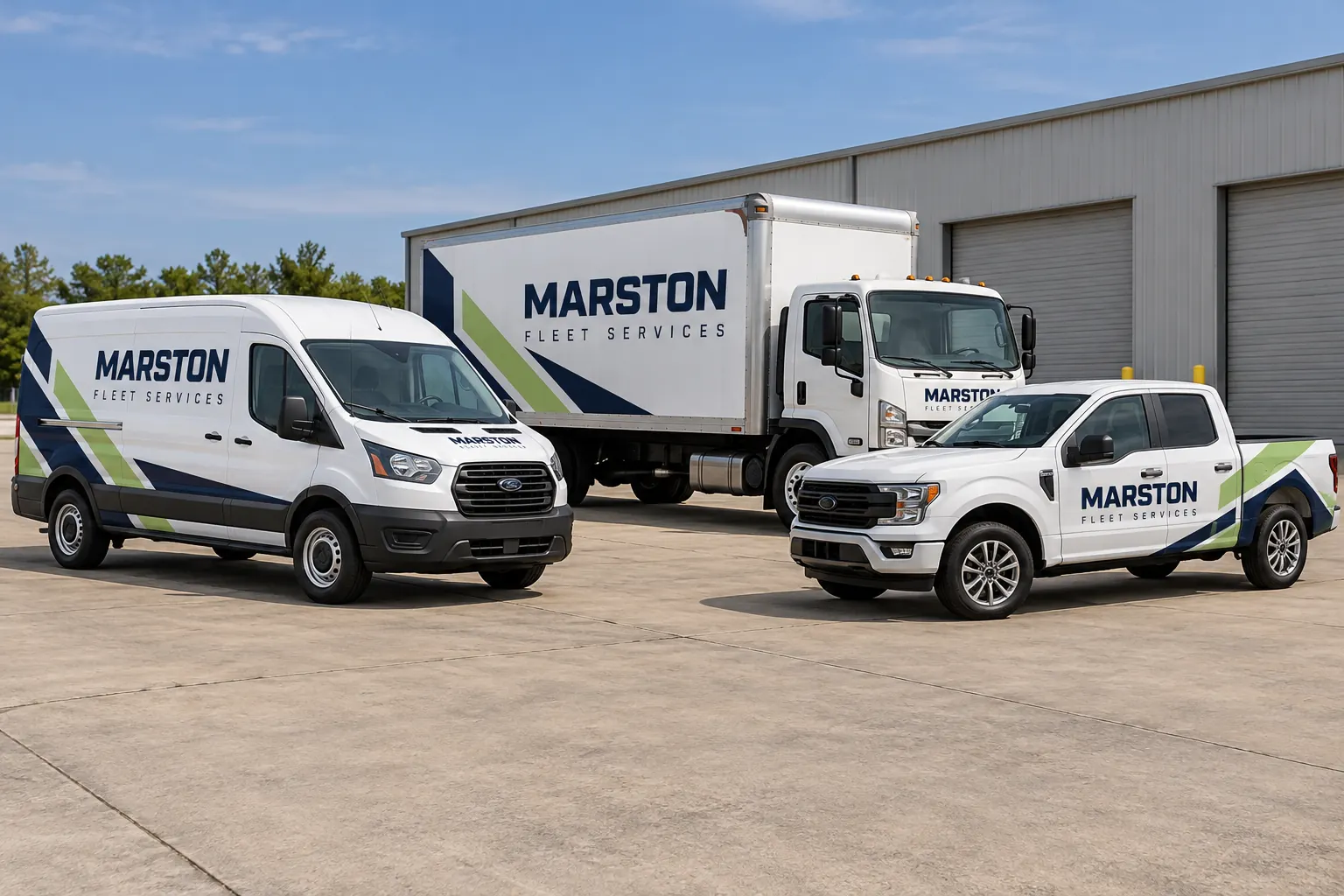
Fictional commercial design concept; not a local customer installation or a photograph of Pelican Wraps premises.
Build one inventory with useful operating groups
Record unit references, actual configurations, quantities, locations and release contacts in a common structure. Group vehicles by real fitted similarities and operating responsibility. A branch total may help commercial planning, but separate bodies, equipment and condition need to remain visible inside that total. Identify new additions separately from existing units receiving a replacement or rebrand.
Use the inventory worksheet to begin and multi-branch guidance for the wider record. Keep each group tied to a person who can answer questions. A central approver should be able to see both the whole program and the exceptions, without forcing every local operating team to repeat the same identity decisions or hiding unit-specific readiness behind one broad fleet number.
Keep the master identity separate from fitted configurations
Retain current source artwork, approved color references, primary messages and controlled changing fields. Then link those assets to fitted sheets for actual van, pickup, box truck or trailer groups. A change to a phone number is different from a new door configuration; the record should show which instruction changed and which units are affected.
Use design standards and color consistency planning. The Marston Fleet Services scene is a fictional identity concept showing varied vehicles in one visual family. It does not document Louisiana branches, installed customer work or an actual fleet program. For a real project, retain accepted fitted versions and actual product references rather than treating the concept image as proof that every body shares one interchangeable production file.
Compare coverage and condition within the actual groups
Specify intended faces and boundaries for each configuration and identify what remains original paint. Attach current photographs and known removal or finish concerns to the units involved. One clean pickup cannot establish the readiness of a previously branded van or a repaired box body. Keep separate asset repair outside the graphics scope unless the actual proposal says otherwise.
Use coverage comparison for alternatives and the cost guide for commercial questions. A useful program estimate states quantities, included design and preparation, relevant product information, exclusions and unknowns. Visitor-entered worksheet figures do not establish supplier rates. Compare the same underlying scope before interpreting a difference in totals as a difference in value.
Assign central and local approvals to real decisions
Name the person accepting master identity, the owner of changing business data and the operator contact for applicable markings. Name the local person controlling each release. These responsibilities can belong to the same individual, but the accepted decision should still be clear. Approval of a logo does not automatically approve every destination, unit field or proposed movement window.
Keep the enquiry, clarification answers, accepted layouts and relevant commercial assumptions together. Use commercial marking planning when applicable and obtain actual authorized data. A statewide fleet should not acquire invented branch information or regulatory identifiers simply to make a design feel complete. If an operating location changes, update the affected field and handoff record rather than silently carrying forward a familiar old layout.
Build releases around operating needs and confirmed arrangements
Identify actual unit roles, available substitutes, proposed start and return windows and the party controlling movement. Separate proposed dates from accepted supplier availability. Different operating groups may require different batch sizes even when the brand and vehicle type are shared. Record dependencies such as missing fit information or a vehicle that cannot leave until another returns.
Use the rollout planner and current Louisiana 511 information where helpful. The worksheet does not book appointments, and a travel link does not approve a route for every vehicle. Confirm actual receiving, access and work arrangements for each accepted release. Keep the transport and operational decision owners visible so a central schedule does not become an unsupported promise to every local team.
Retain a program record that supports additions and repairs
Keep accepted layouts, installed photographs, approved data, relevant product references and applicable care guidance linked to actual units and configurations. Record exceptions and changes before a later order. A new model, replacement door or updated business destination may need a different review even when the master identity remains current.
Use new-model guidance and panel replacement planning for those later decisions. To begin, send the Louisiana fleet brief with actual operating locations, configurations, quantities, photographs, identity files, intended coverage and proposed timing. Identify central and local contacts and unresolved questions. You can start with the information available; completing every worksheet is not a prerequisite to a useful scope discussion.
Frequently Asked Questions
Prepare Your Actual Vehicle Graphics Brief
Send current photographs, vehicle quantities, logo files, coverage preferences and timing. Identify old graphics and paint concerns so the project review can address the actual equipment.
Explore planning resources or request your commercial wrap quote.
