
Mobile, Alabama Fleet Graphics: Plan the Actual Working Vehicle and Handoff
Prepare a Mobile commercial graphics enquiry around working trucks, trailers and the equipment they carry. Pelican Wraps is based in Harvey, Louisiana. Identify the actual vehicle surfaces, protected information and work arrangement before planning release or transport.
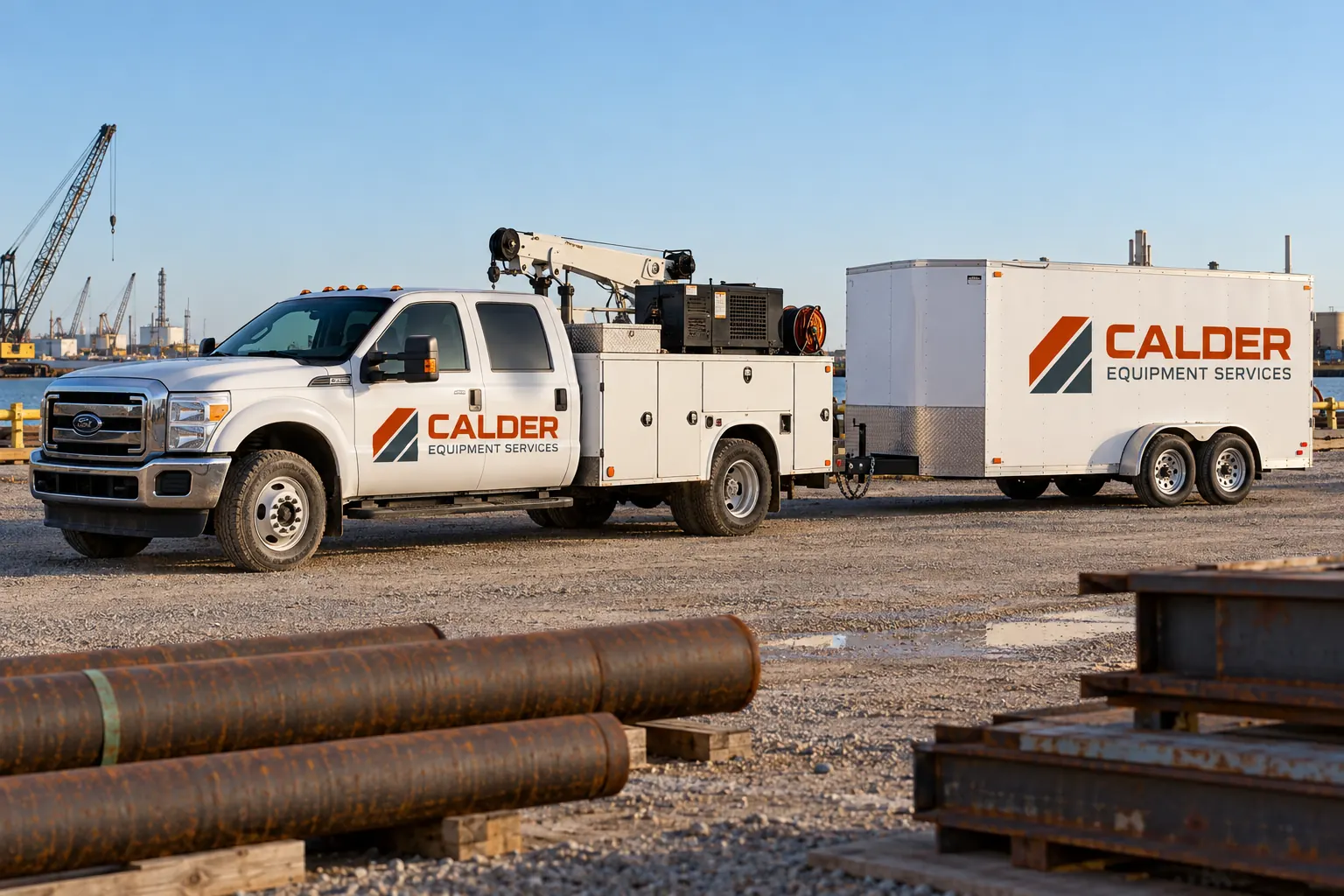
Fictional commercial design concept; not a local customer installation or a photograph of Pelican Wraps premises.
Separate the working assets before choosing graphics
A service truck and enclosed trailer can share a business identity while serving different operational roles. Record each asset reference, body configuration, equipment and intended faces. Explain whether the enquiry concerns a first identity, a replacement or an addition to an existing standard. Identify the people responsible for the vehicle and any separate trailer.
Explore service-body graphics and commercial trailer graphics for the relevant services. Pelican Wraps uses 1201 MacArthur Ave, Suite B, Harvey, LA 70058. This Mobile route does not establish an Alabama office. Confirm the actual scope, work location and receiving arrangement before treating a regional enquiry as a booked local installation.
| Record | Include in the brief |
|---|---|
| Working assets | Separate actual truck, trailer and equipment records |
| Protected details | Operator-approved information, equipment and clear areas |
| Site authority | Actual permission and access decisions by relevant parties |
| Transport scope | Dimensions, movement owner and confirmed work arrangement |
Survey compartments and equipment as part of the layout
Provide overall views and close photographs of compartment doors, handles, latches, rails, hinges, controls and accessories. Identify areas obscured during normal use and surfaces that move separately. A long service description may fit a flat template yet become unreadable when divided across real compartments. Give the main identity an intentional visible area.
Use body-detail planning and the measurement guide. Mark measurements as confirmed or estimated and name the actual unit in each image. The Calder Equipment Services scene is a fictional commercial concept illustrating coordinated truck and trailer identity. It is not evidence of a Mobile customer, inspected equipment or permission to work at a particular industrial site.
Protect operational information and keep authority clear
Have the responsible operator identify required information, warnings and equipment areas that must remain clear. Keep optional business identity separate from internal references and regulated fields. Supply exact authorized data rather than asking a designer to invent plausible carrier numbers, qualifications or agency wording. A clean-looking concept cannot determine operational requirements.
Use commercial marking planning where applicable. Name the person accepting the information and retain the version used on each unit. Site permission is a separate question: branding an asset does not establish access rights, port clearance or authorization to work inside a controlled facility. Describe actual access requirements and resolve them with the relevant parties before including a proposed site in the accepted work arrangement.
Choose coverage around the actual identity and surfaces
Identify the primary business name, main service category and useful contact route. Decide how they relate across the truck and trailer without assuming identical panel dimensions. Define faces and boundaries for partial coverage or lettering, and explain whether a separate piece of equipment is also in scope. Each asset needs a clear production instruction.
Use coverage comparison for alternatives tied to one defined configuration. Ask the proposal to identify the selected product and relevant construction for actual surfaces. Reflective business identity does not independently establish a required safety system. A broad graphic category cannot approve every substrate, compartment or machine, so keep technical questions connected to the actual equipment and supplier review.
Document condition and the real preparation responsibility
Photograph old graphics, repairs and finish concerns on each asset. Provide available history and explain relevant cleaning and operating context. Two pieces of equipment from the same business can have very different starting conditions. Identify what the proposal includes for removal and preparation and what remains separate vehicle or equipment work.
Use readiness guidance to organize the questions. Graphics do not repair an unsound substrate, and the fictional concept does not inspect the real truck. Keep unknowns in the enquiry so the response can explain further review rather than silently treating every painted surface as ready. Avoid turning exposure or a product category into a guaranteed lifespan, universal warranty or fixed preparation price.
Confirm access and transport for the actual working combination
State actual vehicle and trailer dimensions, proposed movement arrangements, departure location and the person controlling release. If the truck and trailer may arrive separately, describe that explicitly. Ask the supplier to confirm receiving, work location and availability for the defined scope rather than assuming every working combination fits the same access arrangement.
Use Alabama DOT travel resources for official journey information and Harvey handoff planning for the business-base discussion. The responsible operator must address the actual route and vehicle requirements. This page does not promise port access, universal on-site work or fixed travel and installation durations. Keep proposed timing distinct from accepted supplier and operational arrangements.
Retain separate records when the working pair changes
A truck and trailer may be separated, reassigned or replaced. Keep accepted layouts, approved data and installed photographs with each actual asset rather than only one combined fleet image. Retain relevant product references and applicable care guidance and record equipment changes before repeating an older instruction.
Use fleet graphics management for continuing additions. To begin, send the Mobile working-vehicle brief with actual asset references and locations, photographs, identity files, intended coverage, condition information and proposed timing. Identify operational, data and movement contacts. The next discussion should establish a suitable real scope and handoff arrangement without inventing a local office, controlled-site authority or completed work that the concept image does not document.
Frequently Asked Questions
Prepare Your Actual Vehicle Graphics Brief
Send current photographs, vehicle quantities, logo files, coverage preferences and timing. Identify old graphics and paint concerns so the project review can address the actual equipment.
Explore planning resources or request your commercial wrap quote.
